



How can you optimise your product pages for organic search?
18 June 2024
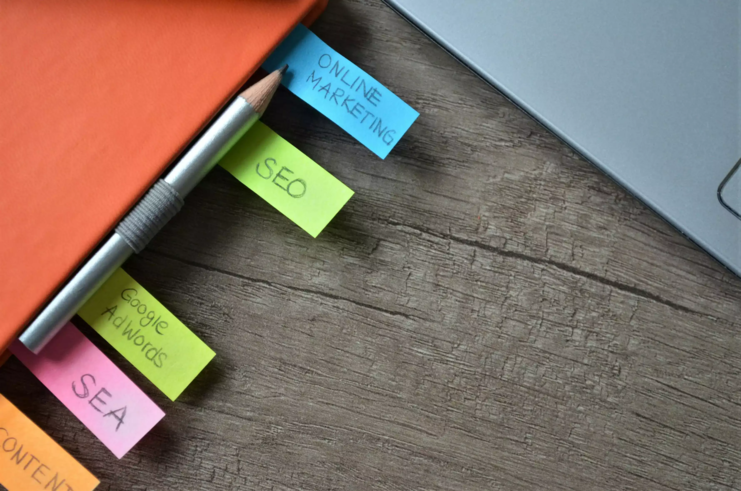
Organic search engine optimisation (also known as SEO, Search Engine Optimisation) is a strategy implemented on your website to ensure it appears in search engine results. Product listings are a key form of content for online retailers, enabling them to easily improve their rankings on SERPs.
In this article, we’ll introduce you to the key concepts of organic SEO, whilst providing you with the tools to develop your product listings so that they help you gain visibility on the SERPs.
Reminder: what is SEO?
SEO is a digital marketing strategy that involves optimising the various pieces of content published on your website by adopting a user-centric approach. The aim is therefore to enrich your website’s lexical field by identifying the most relevant keywords, chosen based on:
- Competition
- Users’ search intent
- The products you sell
- The market and industry in which you operate
This free SEO strategy can quickly become time-consuming if you don’t adopt the right habits straight away. This includes, in particular, identifying the keywords best suited to your audience and your website, as well as optimising your product pages.
Why optimise your product listings?
As well as boosting your conversion and customer retention rates, optimising a product page for SEO allows you to enrich the content of your e-commerce site.
Indeed, not all retailers have a blog to add new keywords to their site. Product pages and the wealth of content that can be published on them therefore serve as the foundation for implementing your SEO strategy.
Product pages are packed with elements that can be optimised, enabling you to quickly gain a significant competitive advantage.
How do you optimise a product page?
To explain exactly how you can use your product pages for your SEO, let’s start with a list of elements you can optimise:
Headings
Headings, as on the rest of your website, are of paramount importance for your organic search rankings. Indeed, these are the first things read by search engines and by users. They enable both types of visitors to understand the purpose and value of the page.
It’s best to place the keyword you’re targeting at the start of the title to make navigation clearer. Please note: don’t settle for just one word in your title; it’s better to make use of ‘long-tail’ keywords.
What does this mean? Generic keywords are already heavily targeted by well-established websites. For this reason, it is more ‘cost-effective’ for you to rank for keyword phrases rather than single keywords. Let’s take this example: it’s easier for you to rank for “Nike Air Force Black trainers” rather than “Nike shoes”.
Also, adding information to the title helps to optimise the click-through rate on search results.
Images
Images are a very important element for e-commerce retailers looking to convert visitors into customers, and customers into loyal clients. These images allow you to show the product from every angle and encourage visitors to make a purchase, whilst avoiding disappointment amongst buyers by giving them a clear idea of the product they will receive.
Images also serve an SEO purpose. Indeed, they are taken into account by search engines. If they are high-quality and well-optimised, you’ll have a better chance of ranking in search results, whether in ‘web’ or ‘images’ results.
Here are the factors to bear in mind when optimising the images you publish:
- The image filename: opt for titles such as “sneakers-nike-air-force.webp” rather than “89439874.webp”;
- Image file size: despite their high quality, images must be compressed to ensure the product page loads quickly, providing a smoother user experience;
- Image format: search engines, particularly Google, tend to favour next-generation formats such as “.webp”. These formats reduce image file size whilst maintaining quality;
- The image’s alt attribute: this attribute allows text to be displayed in place of the image if it fails to load. It is an element read by search engines which, once again, helps your page rank higher in search results. So, using the same example, you could specify “Black Nike Air Force trainers” for your image.
Descriptions
Descriptions can be used to enhance the content of your product pages and improve your SEO.
This written content allows you to broaden the vocabulary of the product listing and include words related to your products and your business. The aim is to provide detailed information about your product and to inform the visitor.
You can therefore include new written content such as the materials used in your product, its detailed dimensions or size, different use cases, its benefits, the user experience, and so on.
How can a PIM help with the SEO of your product pages?
A PIM such as Quable allows you to centralise all your product information and publish it across all your distribution channels. The aim is to ensure consistency across all touchpoints with your target audience and to display the same information, regardless of the platform on which they view your products.
Combining a PIM with a DAM enables you to synchronise the various media files associated with your product pages and optimise them directly within your back-office system.
Taken together, these information-enrichment measures will enable you to optimise the SEO of your product listings without wasting time and whilst avoiding potential human error.
Conclusion
In conclusion, organic search engine optimisation is essential for improving the visibility of your e-commerce site.
Well-optimised product pages play a central role in this strategy. By paying close attention to titles, images and descriptions, you can not only increase your conversion and customer retention rates, but also gain a competitive edge. Using a PIM such as Quable helps you centralise and optimise product information, thereby ensuring consistency across all your distribution channels.
Adopt these best practices to maximise your SEO and boost your online performance.