



How can you translate your product pages effectively using the Quable PIM?
18 April 2025
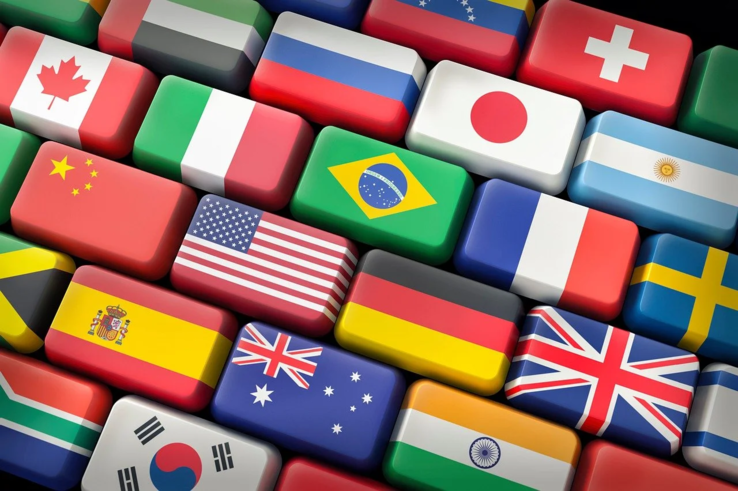
In an increasingly competitive global market, the importance of translation in e-commerce cannot be underestimated. Indeed, providing a seamless and consistent experience for customers across different regions requires much more than simple translations. Effective management of product translations goes beyond simply converting words; it involves a deep understanding of cultural nuances, consumer habits and local needs.
Today, with the proliferation of online sales channels and the diversity of audiences, businesses must adopt integrated solutions to ensure fast, accurate and consistent multilingual management. Translation thus becomes a strategic lever that directly influences conversion rates, search engine optimisation and brand reputation.
It is in this context that tools such as PIM (Product Information Management) come into their own, enabling the automation and centralisation of product translation management to deliver an optimal customer experience.
The strategic importance of translation
A key factor in conversion
Consumers tend to trust websites more when they are addressed in their own language. A CSA Research study reveals that 76 per cent of internet users prefer to buy products presented in their mother tongue. Even if they speak a foreign language, their engagement and conversion rates will be significantly higher when faced with localised content. Put simply, a well-translated product page directly influences the decision to buy.
A requirement for search engine optimisation (SEO)
Translations also impact online visibility. Search engines, such as Google, prioritise high-quality localised content in international search results.
A poor translation or the lack of localised content can therefore hinder a website’s SEO performance in foreign markets. Conversely, a well-thought-out multilingual strategy, with translations tailored to local keywords, considerably improves the organic reach of the product catalogue.
Essential multi-channel consistency
In an omnichannel approach, product listings are not confined to an e-commerce website alone. They also feed into marketplaces, social media, PDF catalogues, newsletters and even mobile apps. Each channel becomes a showcase for the brand. If there are linguistic inconsistencies across these touchpoints, the brand’s credibility is undermined.
Rigorous, centralised translation management is therefore essential to ensure a seamless and consistent experience, regardless of the channel used.
Translation that goes beyond a literal rendering
Translating a product description is not simply a matter of replacing words from one language with those of another. It involves adapting the content to cultural specificities, consumer habits and local regulations. A cosmetic product, for example, is not presented in the same way in France, Japan or Brazil.
A good translation must therefore combine accuracy, commercial acumen and cultural sensitivity.
The challenge of translation in product management
In a context of international trade and market diversification, translating product sheets presents a real headache for marketing and e-commerce teams. When a company manages hundreds, or even thousands, of product listings, each product description must be accurately translated into several languages to meet the requirements of local markets. This time-consuming and complex task quickly becomes unmanageable without a suitable strategy and the right tools.
There are numerous risks of human error: fields being overlooked for translation, inconsistencies in terminology across languages, syntax or grammar errors, or content that is poorly adapted to local cultural contexts. These errors, often seemingly trivial, can have a direct impact on brand image and commercial performance, by creating confusion amongst customers or undermining search engine optimisation (SEO) in foreign markets.
Furthermore, traditional translation processes, based on back-and-forth email exchanges or shared Excel spreadsheets, are both slow and costly. They tie up significant resources and considerably slow down the time to market for products.
A simple screenshot of a multilingual Excel spreadsheet ‘before’ is enough to illustrate this complexity: endless rows and columns, empty cells, duplicates, manual annotations, and so on. These are all signs of a system that’s struggling to keep up, and which urgently needs modernising through tools such as PIM, capable of centralising, automating and ensuring the reliability of translation management.
How Quable is transforming product translation
In an environment where responsiveness and consistency are essential, Quable is revolutionising the way companies manage their product translations. Thanks to its integration with PIM (Product Information Management), translation is no longer a burden but becomes a driver of organisational efficiency and performance.
Centralisation of multilingual content in the PIM
With Quable, all product information – titles, descriptions, attributes, visuals – is centralised in a single space, including all necessary languages. This centralisation prevents information from being scattered and enables all teams (marketing, e-commerce, exports, etc.) to work from a common, structured and always up-to-date basis.
Flexible translations tailored to your needs
Quable adapts to each company’s translation strategy by offering several options, either as standalone choices or in combination:
- Manual translation: teams can directly edit or expand multilingual content within the Quable interface, language by language.
- Machine translation: an instant translation feature is built in, powered by Google Translate, for a quick initial localisation.
- Translation via import/export: for companies wishing to work with external agencies or freelance translators, Quable allows you to export content for translation as files (Excel, CSV, etc.), then easily re-import them once translated.
- Translation via specialist partners: Quable is compatible with third-party solutions such as TextMaster, allowing you to outsource translation to native-speaking experts directly from the platform, with seamless, integrated tracking.
Simplified translation management
From Quable’s intuitive interface, users can initiate and track translations in just a few clicks, directly on the relevant records. This integrated management saves a considerable amount of time, whilst ensuring the consistency and quality of multilingual content across all distribution channels.
Conclusion
Translation in e-commerce is no longer a mere formality, but a strategic pillar of business growth and competitiveness. As brands expand internationally, the multilingual management of product pages becomes a complex challenge requiring suitable tools.
Integrating a system such as Quable’s PIM not only centralises product information but also simplifies and automates translations, whilst ensuring their quality and consistency across all channels.
By optimising these processes, businesses can not only improve their online visibility and conversion rates, but also deliver a seamless and personalised customer experience worldwide. Ultimately, investing in effective translation management is essential for any brand wishing to thrive in a globalised market.