



New POS applications and trends: towards omnichannel and smart systems
3 November 2025
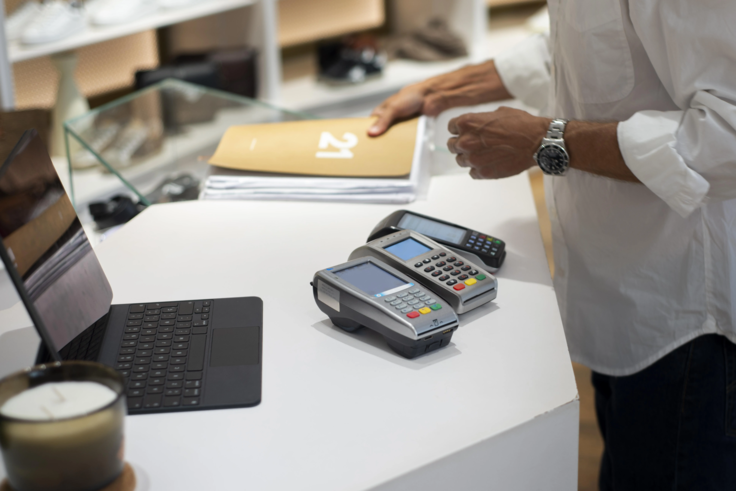
Point-of-sale (POS) systems have evolved considerably in recent years, moving from simple cash registers to smart platforms capable of managing the entire customer journey.
This transformation is driven by the rise of omnichannel retail, the digitalisation of shops and the growing adoption of mobile technologies. To remain competitive, businesses must keep pace with these trends and adopt POS solutions that combine speed, flexibility and connectivity. Innovations such as self-checkout, click & collect, contactless payments and the ‘endless aisle’ concept are transforming the customer experience by offering greater fluidity, personalisation and choice.
More than just a transaction tool, the POS is becoming a strategic lever for improving customer satisfaction, optimising stock management and enhancing the interaction between physical and digital retail. Understanding these developments is essential for preparing for the future of retail.
Trend No. 1: Self-checkout and automated checkouts
Self-checkout and automated checkouts are rapidly gaining ground in the supermarket and retail sectors, allowing customers to scan and pay for their items without going through a cashier.
This self-service payment method meets the growing demand for speed and efficiency in shops. The main benefits include shorter queues, better allocation of staff to higher-value tasks, and a faster shopping experience for consumers in a hurry.
However, these systems require customer support to prevent scanning errors and payment issues, particularly for users less familiar with the technology. They also involve investment in hardware and software maintenance.
Successful adoption relies on striking a balance between automation and human assistance, ensuring that the speed gains are not achieved at the expense of customer satisfaction.
Trend No. 2: Click & Collect / Order Online, Pickup in Store (O2O)
The Click & Collect model, or O2O (Order Online, Pickup in Store), allows customers to order online and collect their purchases directly in-store.
This approach combines the convenience of e-commerce with the immediacy of physical retail. For retailers, it represents a way to increase in-store footfall, build customer loyalty and streamline order fulfilment. The benefits also include reduced delivery times and improved stock management, thanks to greater visibility of stock levels.
Optimising the customer journey can be achieved through dedicated collection points, real-time notifications on order availability and fast confirmation processes.
By enabling customers to collect their purchases without waiting, Click & Collect improves the user experience and encourages additional purchases whilst in-store.
Trend No. 3: Endless Aisle – selling beyond in-store stock
The ‘Endless Aisle’ concept enables retailers to offer in-store items that are not physically available but are stocked in another warehouse or on an online platform.
This approach offers retailers an expanded catalogue without increasing retail floor space and enables them to meet specific or rare demands. The customer experience is enhanced, as consumers can access products they would not otherwise have found, whilst retaining the convenience of in-store shopping.
To implement this concept, seamless integration with the ERP and PIM systems is essential, in order to guarantee the actual availability of products and provide accurate information on stock levels and delivery times.
Trend No. 4: Contactless payment, QR codes and BNPL (Buy Now, Pay Later)
Contactless and QR code payments are becoming widespread, offering speed and security to customers.
Transactions are becoming smoother, reducing queues and friction at the till. At the same time, the Buy Now, Pay Later (BNPL) model is attracting new customer segments by offering attractive financial flexibility.
These solutions have a positive impact on conversion rates, as they make the purchasing process easier, and strengthen customer loyalty through a modern payment experience tailored to current expectations.
The combination of these options enables retailers to cater to omnichannel shopping behaviour and the needs of a mobile and connected customer base.
Trend No. 5: Unified omnichannel POS
The unified omnichannel POS enables operations to be centralised and provides a consistent experience across all touchpoints. For example, a customer can return a product purchased online directly in-store, or use loyalty points accumulated across multiple channels.
Stock levels and promotions are managed centrally, preventing stock-outs and inconsistencies. This type of solution also improves visibility into customer behaviour, enabling offers to be personalised and helping to build stronger customer relationships. Adopting a unified POS system facilitates coordination between e-commerce, physical shops and marketplaces, whilst simplifying logistics and accounting management.
Retailers thus benefit from improved operational efficiency and a consistent customer experience, which is essential in a competitive environment.
What does the future hold for POS systems?
The future of POS systems is moving towards unified omnichannel solutions, incorporating artificial intelligence to offer real-time recommendations and anticipate customer needs.
These systems are increasingly being integrated with CDPs, DXPs and PIMs, creating a holistic customer experience where every interaction is consistent and personalised. API-first architectures and SaaS solutions offer the flexibility and scalability needed to keep pace with retailers’ growth and the rapidly evolving expectations of consumers. This technological convergence not only optimises sales and customer loyalty but also enables better management of stock, promotions and customer relations across all channels.
The POS systems of tomorrow are thus becoming true strategic platforms, at the heart of the customer experience and the operational management of shops.