



Product Information
Agentic PIM: definition, how it works and real use cases
5 min - 17 November 2026
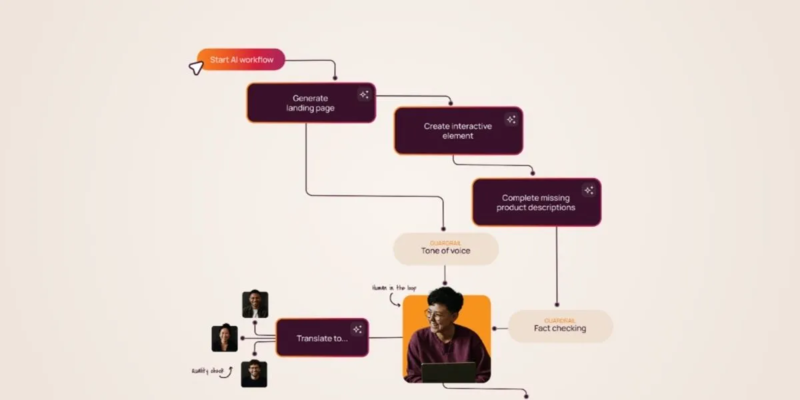
Your catalogue holds thousands of products, each with dozens of attributes, in several languages and for a growing list of channels. Generative AI already helps: it drafts a description or translates a listing when someone asks. Someone still has to spot what needs doing, launch the task, check the result and publish it. An agentic PIM takes over that loop. AI agents built into your product information management system watch the catalogue continuously, detect gaps, propose fixes and apply them once you approve. Our complete guide to PIM covers the basics of the system itself. Here, we look at what changes when agents join the team.
What is an agentic PIM?
An agentic PIM is a product information management system in which AI agents carry out complete tasks on product data: checking, correcting, enriching, translating or tagging. Where generative AI answers a one-off request, an agent pursues a goal and works through every step needed to reach it. It submits its proposals for human approval whenever your rules require it.
Three traits define it:
- Continuous: agents monitor the catalogue without waiting for a prompt.
- Goal-driven: each agent pursues an outcome, such as complete listings in every locale, and plans the steps itself.
- Governed: agents act within your data model, your workflows and your approval rules.
AI in a PIM vs agentic PIM: what is the difference?
Most PIMs now include AI features. You select a product, click a button and get a description, a translation or a set of attributes. The AI carries out the task; you decide what to ask, when, and on which products.
An agentic PIM moves the starting point. Agents take over from where on-demand AI stops and keep working on an ongoing basis. Take a translation. With on-demand AI, someone notices that the French listing is out of date and requests a new version. With an agent, the change to the English source triggers the check: the agent spots the drift, compares the existing translation with your terminology and brand voice, then proposes an update.
The two approaches complement each other. AI handles the task you request; agents handle the tasks nobody has spotted yet.
How does an agentic PIM work?
Four building blocks make agents reliable on product data:
- A structured product repository: agents read the same data model, attributes and completeness rules as your team. The clearer your data governance, the more dependable their output.
- Specialised agents: each agent covers one job, such as translation, SEO or asset tagging, instead of one general assistant trying to do everything.
- Approval workflows: agents plug into the same product data enrichment workflows as your team, and changes wait for sign-off where your rules call for it.
- An open ecosystem: in Quable, agents run on the Ibexa Agentic Platform. You connect the tools you already use via MCP and choose your LLM.
Because they are built natively into the PIM, agents already know your product data and settings. They get to work without exports, re-keying or long explanations.
Agentic PIM use cases: what agents can take on
Agents bring the most value on repetitive, rule-based work that teams rarely have time to do continuously. Here are typical use cases, grouped by the type of content they cover.
Product content
These use cases keep listings complete and consistent across languages:
- Keeping translations in sync: when a source listing changes, an agent can spot the translations that no longer match, check them against your terminology and brand voice, and draft updates for review. A natural next step for teams that translate product pages across many markets.
- Closing SEO gaps: an agent can review listings for missing or weak fields, such as titles, descriptions or attributes, and suggest fixes in order of priority.
- Enriching marketing copy: an agent can draft descriptions, taglines and selling points from your product data and brand guidelines, so the copy stays grounded in verified information.
- Filling attributes from documents: an agent can read a product's technical sheets or images, propose values for empty attributes and show where each value comes from.
Media and assets
These use cases keep the media library usable and compliant:
- Tagging visuals: an agent can identify what each image shows and tag it with your controlled vocabulary, so assets are easier to find.
- Linking orphan assets: an agent can match media linked to no product with the right product, using clues such as the SKU in the filename. It takes over the work described in our article on matching media to products.
- Checking usage rights: an agent can flag assets whose usage rights have expired and propose removing them from the products that still use them.
In every case, the agent proposes and your team approves before anything changes in the catalogue.
Why agentic PIM matters for agentic commerce
Shoppers increasingly ask AI assistants to search, compare and recommend products. Those assistants read your product data as it stands. An empty attribute, an outdated translation or an untagged image becomes a missed recommendation. We explored the first signs of this shift in our article on zero-click, voice and conversational commerce.
An agentic PIM keeps product data complete and consistent continuously, at the pace machines consume it. Your catalogue stays readable for people and for AI agents, on every channel and in every market.
Staying in control: governance and compliance
Agents suggest, you decide. Every action follows your approval rules, your terminology and your brand voice. Your team remains the guardian of the brand and of the customer relationship, while agents clear the queue of tasks standing between you and the work only you can do.
Governance also covers regulation. The EU AI Act sets transparency and oversight obligations for AI systems, and our article on the AI Act and brands' obligations explains what applies to you. As part of the Ibexa Agentic Marketing Platform, Quable brings European heritage, ownership and hosting, which matters for data sovereignty and GDPR compliance.
How to get started with an agentic PIM
Agents amplify the quality of the repository they work on, so preparation pays off:
- Audit your data: set completeness rules and tidy your attribute structure first.
- Pick one painful task: out-of-sync translations or untagged visuals make good first candidates.
- Define approval rules: decide which changes need sign-off, and who gives it.
- Measure: track completeness and time to market before and after.
- Extend gradually: add agents, or build your own with plain-language instructions, as your needs grow.
From system of record to active teammate
An agentic PIM keeps your product information under constant care. Agents spot gaps, propose fixes and act once you approve, while your team focuses on decisions that need judgement. The result is product content that stays complete in every language and on every channel, including the ones read by AI. See how Quable Agents work inside your PIM and book a demo.