



Turning regulatory constraints into a strength for your business
8 December 2022

They are constantly changing within your sector, vary from one country and/or territory to another, and yet they affect every industry: household appliances, food and drink, fashion and textiles, and so on.
Regulatory requirements are mandatory to ensure hygiene, safety and, more broadly, the well-being of your current and future customers. As they ensure full compliance from a legal perspective, they also serve as a guarantee of your brand’s reliability and credibility. How can you turn these requirements into a strength for your business? How can legal and regulatory aspects become drivers of growth for your brand?
Regulatory requirements as competitive advantages
Food scandals, growing consumer scrutiny of products, their composition and ingredients, and the success of brand and product rating platforms such as Yuka (for food and cosmetics) or Clear Fashion (for clothing)... The legal and regulatory aspects of products sold commercially, whether online or in physical shops, are of paramount importance to consumers.
Some e-commerce players go even further and do not ‘merely’ state which standards and regulations they comply with, as required by law. Some brands highlight the high quality of their products, their composition, the origin of the raw materials, the location of the manufacturing and/or assembly stages, and the way in which these products have been made. Some also choose to highlight their Yuka score, as does the skincare brand Typology, or our client NAOS, on its e-commerce site with the Etat Pur brand, for example.
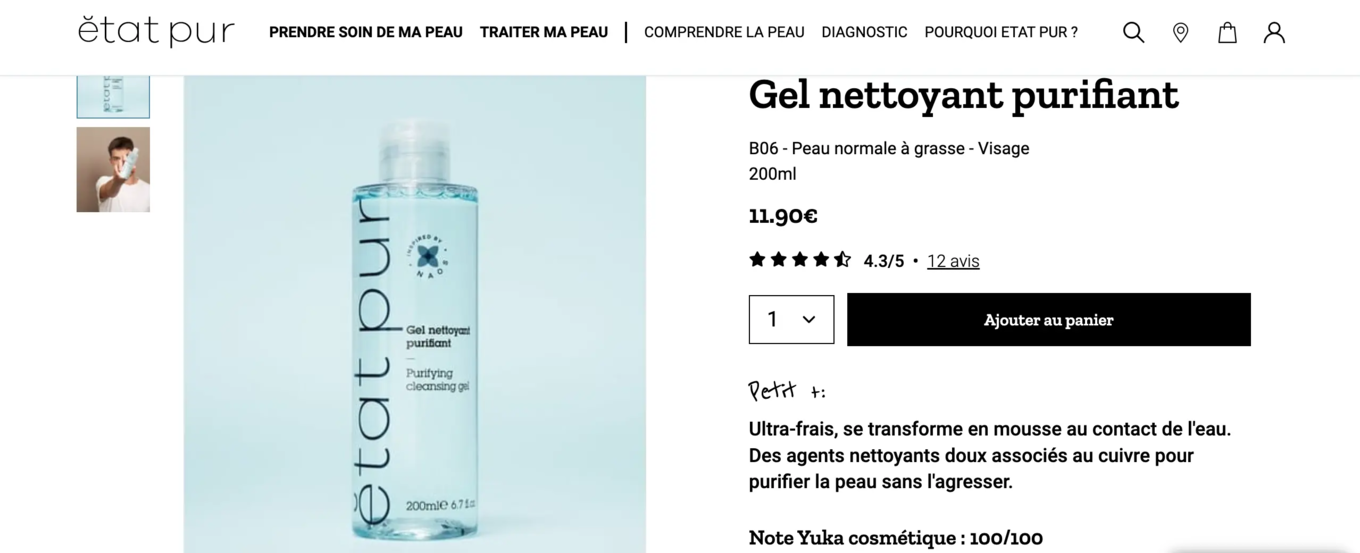
Although regulatory requirements must be complied with, not all brands necessarily choose to highlight them, whether in-store or online.
The fact that your competitors do not highlight this to the same extent suggests a lack of confidence in the composition of their products.
Conversely, highlighting regulatory requirements is therefore a strong and powerful advantage, a guarantee of quality and unshakeable trust in your brand and your products. In short, emphasising the regulatory requirements for your products also serves as a reassurance for your existing customers and, above all, for those who are not yet familiar with your brand.
PIM as a growth driver
Regulatory requirements, like all product-related information, can sometimes be difficult to manage for e-retailers. The brands concerned need to have access to the same level of information, which must be consistent and standardised across all sales channels. Furthermore, as this is legal and therefore mandatory information, it is all the more important to have genuine and easy access to the same information from anywhere.
The PIM platform is an indispensable ally for brands subject to strict regulatory constraints. When these constraints are constantly changing and vary depending on the country or region of the world where you wish to market your products, a scalable and flexible tool is essential – and sometimes vital.

Many features and functions of the Quable PIM platform assist our clients in this regard, such as completeness checks which ensure product listings are as comprehensive as possible, thereby preventing a product from being published online without certain information (such as photos, prices, descriptions or, for example, regulatory requirements and/or ingredients) that are key to your business, essential or even mandatory.
Conclusion
PIM has no trouble adapting to the changing demands of e-commerce, which are sometimes mandatory and leave brands and e-retailers with very little time to achieve compliance. Better still, it was practically designed for this very purpose. As with the example of the AGEC Act, which is due to be rolled out and come into force in early 2023, regulatory constraints and the resulting mandatory compliance are often a source of anxiety.
However, thanks to PIM, standards and regulations can be turned into a competitive advantage by highlighting them on your product pages with the help of PIM, thereby boosting consumer confidence, credibility and the quality of your brand and its image.